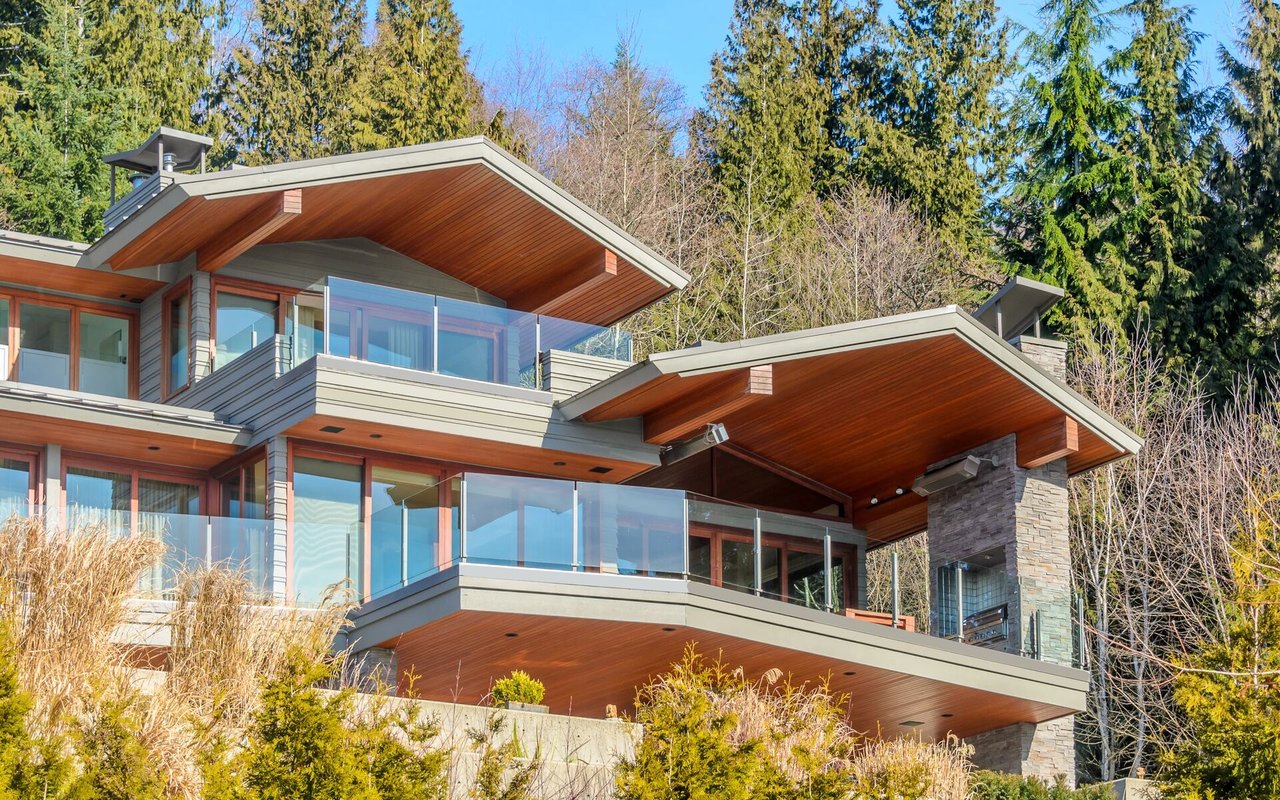
A recent East Millcreek listing described a full teardown-to-studs rebuild as "fully permitted by Millcreek City." Ten years ago, that sentence could not have existed. There was no Millcreek City to issue the permits. The area was unincorporated Salt Lake County, and the phrase a buyer looks for on a rebuilt home was different, or absent. That small change in listing language is the tell. It points at the single fact that reshapes how anyone should read a Millcreek price today.
Millcreek incorporated at 9:30 a.m. on December 28, 2016, consolidating four historically separate East Bench communities, Millcreek, East Millcreek, Canyon Rim, and Mount Olympus, into one city of about 64,000 residents. The consolidation is what makes the citywide median a bad comp for any specific home, and it is also what governs what a buyer can build once they own.
One city, four price maps
The portals will show you a Millcreek median somewhere between roughly $594,000 and $685,000, depending on which service is drawing the boundary and which month is being counted. Redfin put the three-month median through May 2026 at $683,000. Zillow's ZHVI for the city as of late June 2026 landed near $645,000. Movoto pegged June 2026 at $600,000. All of them are describing the same city, at nearly the same moment, with an $85,000 gap between them.
The disagreement is not a data problem. It is a geography problem. Millcreek was assembled out of pieces that never behaved as one market, and the local MLS data still reflects that. In Q1 2026, closed sales inside the city ranged from $234,800 to $2,190,905 across 95 transactions, with a median of $607,500 and an average of $655,646.
Zoom into the pieces and the spread is easier to read:
| Sub-market | Recent median | $/sf | Character |
|---|---|---|---|
| Mount Olympus | ~$1.20M (3 mos through May 2026) | mid-$400s | Bench-edge, custom and updated mid-century |
| East Millcreek | ~$949,000 | ~$308 | Established single-family, Eastwood Hills pocket |
| Canyon Rim | ~$724,000 | ~$331 | Rim above Mill Creek Canyon, mature trees |
| Millcreek Town Center | mixed condo and townhome infill | varies | Highland Dr corridor, newer construction |
Mount Olympus alone posted an 18.1% year-over-year gain on the three months through May 2026, with a median of $1.2 million and homes going under contract in 6 days. The citywide figure absorbs that heat, dilutes it with $400,000 townhome sales along Highland Drive, and hands the reader back a number that describes neither market. If a buyer is comparing "Millcreek" to Holladay or Sugar House on a portal, they are comparing an average of four submarkets to a single one, and the comparison quietly breaks.
Why the spread is structural, not statistical
Most Salt Lake cities have a coherent price surface because they grew as one place. Millcreek did not. It grew as four unincorporated pockets that Salt Lake County declined to annex after World War II, and by the 1980s the area was mostly built out under separate names. Salt Lake County created a Millcreek Township in 2002 to give the area more local planning control and to prevent piecemeal annexations by neighboring cities. A 2012 incorporation ballot question failed with only 40 percent of the vote. A second attempt passed on November 3, 2015, and the city was formally recorded a year later.
The result is that Millcreek's housing stock predates its city government by 40 to 70 years in most neighborhoods. The bench-edge streets in Olympus Cove were platted, built, and appreciated as an executive enclave for decades before any Millcreek zoning code applied to them. Millcreek Town Center, by contrast, is being newly zoned and newly built. Same city, same median calculation, different eras of building, different buyers, different underwriting logic. The median treats them as one bucket. The market does not.
The permitting shift buyers underestimate
Here is the piece that catches renovators and investors most often. Before December 28, 2016, planning, zoning, and building permits inside the current Millcreek boundary were issued by Salt Lake County. After incorporation, all of that moved to Millcreek City. The general plan was adopted in early 2019, and the City Center Overlay Zone was codified as Chapter 19.73 of the Millcreek code. Police, fire, and parks are still in a contracted transition through Salt Lake County and Unified services, but land-use authority is fully local.
For a buyer touring a 1958 rambler in East Millcreek, this changes three things.
- ADUs and additions. Millcreek City reviews accessory dwelling unit applications and additions under its own ordinance. A basement ADU or garage conversion permitted before 2017 was reviewed under county rules; anything applied for since is under Millcreek's. That matters when the listing says "permitted ADU" but the paperwork lives in two different agencies.
- Teardown-rebuild scrutiny. A high-end market has emerged in East Millcreek and Canyon Rim for studs-out rebuilds, and the phrase "fully permitted by Millcreek City" is now used as an active marketing signal. It means the seller can produce a clean permit trail from the current jurisdiction. On older rebuilds, that trail may sit with the county and take longer to reconstruct at underwriting.
- The City Center Overlay Zone. Anything inside the CCOZ around 3300 South between Highland Drive and 1300 East is being pulled toward mixed-use and higher-density outcomes by design. A single-family parcel on the edge of that overlay carries a different long-run assumption than one two blocks north.
None of this shows up in a median. All of it shows up in a title report and a permit history.
What the Highland Drive corridor is doing to comps
Since incorporation, Millcreek has concentrated its civic and commercial investment in a compact area between Highland Drive and 1300 East at 3300 South. Millcreek Common, the city's plaza with an ice ribbon and splash pad, opened in December 2022 and won the 2024 CoStar Impact Award for redevelopment of the year in the Salt Lake City market. The adjacent six-story Millcreek City Hall was completed in 2024, roughly 76,000 square feet, with ground-floor retail, a coffee house, a restaurant, and a public market. Its rooftop photovoltaic array supplies about 30 percent of the building's annual energy. Preliminary site work confirmed that a Wasatch fault line runs directly through the city center parcel, which shaped the structural engineering rather than the location.
Phase 2 broke ground on May 13, 2025, and is scheduled to open in spring 2027, adding a 19-hole mini-golf course, a skate park, a splash pad, a children's play structure, and 135 new trees. The city will mark its ten-year anniversary on December 28, 2026, roughly a quarter into that construction window.
Two effects on the price map are already visible. Townhome and condo infill along the Highland Drive corridor now competes on walkability to Millcreek Common in a way it could not before 2022, which explains why some of the newest units are pricing above the citywide median despite smaller footprints. And single-family neighborhoods within a short drive of the corridor, particularly parts of Canyon Rim and East Millcreek, are pulling forward some of the demand that used to flow south to Holladay for a walkable civic node. The spread between Mount Olympus and Canyon Rim is widening, and the spread between Canyon Rim and Town Center townhomes is narrowing.
Reading a Millcreek comp
Three practical adjustments make a Millcreek comp defensible.
- Comp inside the sub-market, not the city. A Canyon Rim rambler should be priced against Canyon Rim ramblers. The citywide median is a headline, not a comp set. Kris Bowen's group put Q1 2026 median days on market at 37 across the city, but well-prepped homes in strong catchments regularly go under contract in two to four weeks. The gap between those numbers is the same information gap the median creates.
- Verify the permit jurisdiction on any post-1990 addition. Anything filed after December 28, 2016 sits with Millcreek City. Anything earlier sits with Salt Lake County. On a rebuilt or expanded home, both files matter.
- Treat school catchment as a pricing input, not a preference. The Skyline High and Olympus High attendance boundaries have been a persistent pricing factor inside Granite School District, and they do not follow neighborhood names cleanly.
FAQ
Is the Millcreek median actually going up or down? Both, depending on where. Mount Olympus was up about 18 percent year over year on the three months through May 2026, while some Zillow cuts of the broader city showed a 4 percent decline over the same window. The direction depends on the sub-market weighting inside whatever geography a service is drawing.
Does Millcreek's incorporation affect property taxes? Property taxes are set by overlapping taxing entities, and land-use authority is separate from the tax rate. The relevant change for buyers is not the tax bill, it is who reviews permits and enforces zoning, which is now Millcreek City for anything after 2016.
Should a buyer wait for Phase 2 of Millcreek Common to open before buying near it? Waiting for a completion date rarely improves buying position when the direction of value is already priced in. Phase 2 is scheduled for spring 2027, and comps within walking distance of the plaza have been repricing since 2022. The question is which sub-market fits the household, not which construction milestone is closest.
The reader who came in looking for a Millcreek number leaves with a map instead. That is the correct trade. If you are underwriting a specific home in Olympus Cove, East Millcreek, Canyon Rim, or the Highland Drive corridor and want a comp set that reflects the sub-market you are actually buying into, Align Complete Real Estate Services can put the right one in front of you. Contact Us.