Most of the guidance written about earthquake risk in Yalecrest assumes a safety net that no longer exists. Search around and you will still find contractor sites telling homeowners to apply today for up to 75 percent off a seismic retrofit through Salt Lake City's Fix the Bricks program. As of this writing, the city's own Housing Stability Division page says the opposite: the program is closed to new applicants, and it was already carrying a wait of more than ten years before it closed. For a neighborhood where the housing stock is overwhelmingly unreinforced masonry, that is not a footnote. It changes what a buyer should ask, what a seller should disclose, and which financial tool actually does the work now.
The Wall Behind The Craftsman Charm
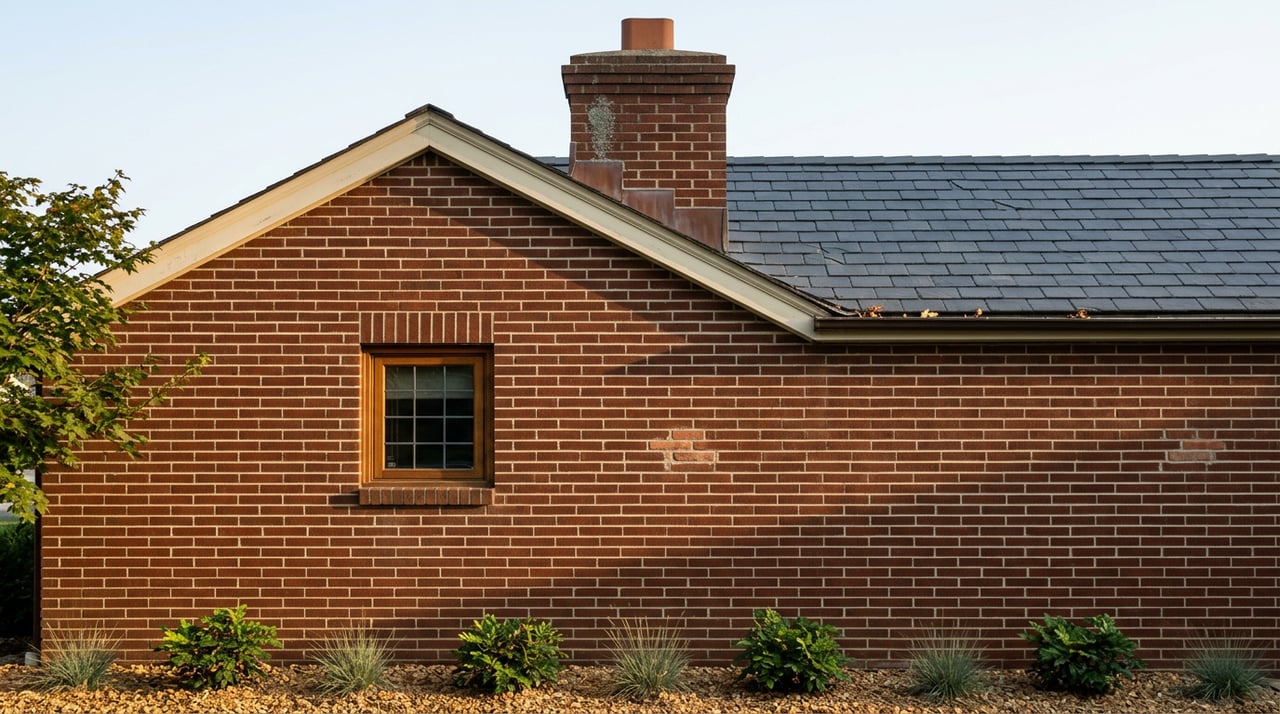
Yalecrest was platted across 22 subdivisions between 1910 and 1938, and the Tudor and English Cottage revival homes that give the district its character were built the way almost everyone built brick homes in that era: multiple wythes of brick stacked without steel reinforcement. That construction method is called unreinforced masonry, or URM, and it was standard practice in Utah right up until building codes changed in the 1970s to prohibit it.
Salt Lake City's own building damage modeling has flagged Yalecrest as one of the worst-positioned neighborhoods in the county for this reason. A 2018 Deseret News analysis of county assessor data found that roughly 9 in 10 brick-and-mortar buildings in Yalecrest are unreinforced masonry, the highest concentration of any neighborhood examined, ahead of Rose Park and the southwest Avenues. Separate seismic-loss modeling cited by a local brokerage's earthquake explainer put Yalecrest-area homes at 70 to 100 percent expected structure loss in a major quake, a figure high enough that it stands out even in a county where the state estimates one in three homes could be at risk.
The reason this matters more here than almost anywhere else in Salt Lake is geography as much as construction. The Wasatch Fault runs directly along 1300 East, according to K.E.E.P. Yalecrest, the neighborhood's own historic district advocacy group, established in 2008 to track exactly these issues.
During the past 6,000 years, a strong earthquake of magnitude 6.5 or greater has occurred roughly once every 350 years along the central segments of the Wasatch Fault, and experts consider the fault overdue for another one.
That is not a hypothetical hanging over the neighborhood. It is a recurrence interval, and Yalecrest sits on top of it.
What Fix The Bricks Was Built To Solve
Salt Lake City launched Fix the Bricks in 2016 with FEMA disaster mitigation funding, targeting the roughly 144,000 pre-1970 brick homes across the Salt Lake Valley considered the region's highest disaster mitigation priority. The program funded two specific interventions: securing the roof-to-wall connection and bracing chimneys, the two failure points most responsible for collapse in a URM structure during an earthquake. Retrofits following the Utah Guide for the Seismic Improvement of Unreinforced Masonry Dwellings typically ran around $20,000 for a mid-sized home, with the grant covering up to 75 percent, leaving the homeowner responsible for something closer to $5,000.
For homeowners who got in, the results held up. After the magnitude 5.7 Magna earthquake struck the Salt Lake area in March 2020, the State Historic Preservation Office surveyed affected historic districts and found that homes already retrofitted through the program had sustained little or no seismic damage.
The Program Closed While You Weren't Looking
That track record is exactly why the current status matters. The Fix the Bricks application page states plainly that the program is not accepting additional applications, that it is not a masonry repair program, and that the wait time for new applicants was already running past ten years even before the closure. A separate Housing Stability Division page confirms the same thing in fewer words: Fix the Bricks is currently closed, though the city's Minor and Home Repair programs remain open for unrelated work.
That leaves a gap. A Yalecrest home that has not been retrofitted cannot get in line for the subsidy that used to make retrofitting affordable. Insurance does not fully absorb the difference either. After the Magna quake, at least one major carrier initially denied earthquake coverage on a URM home before the retrofit history was factored in, and unreinforced masonry construction is a known factor in higher earthquake insurance premiums across older Salt Lake City neighborhoods generally.
The Tax Credit That's Now Carrying More Weight
With the free public option closed, the tool that actually moves the cost needle for a Yalecrest homeowner is the Utah Historic Preservation Tax Credit, and it works differently enough from Fix the Bricks that the mechanics are worth laying out side by side.
| Fix the Bricks (closed) | Utah Historic Preservation Tax Credit | |
|---|---|---|
| Status as of 2026 | Not accepting applications | Open, ongoing |
| What it covers | Roof-to-wall connection, chimney bracing | Interior and exterior rehab, including structural and mechanical systems |
| Cost to homeowner | About 25 percent of a $20,000 project | 80 percent of costs, offset by a 20 percent state credit |
| Timing requirement | Waitlist, previously 10-plus years | Application must be submitted before or during the project, not after |
| Eligibility anchor | Pre-1975 URM home in Salt Lake City | Building listed on the National Register of Historic Places |
Yalecrest qualifies on that last line. The district was listed on the National Register of Historic Places in 2007, which means a homeowner doing a qualifying rehabilitation, seismic work included, can claim a 20 percent non-refundable credit against Utah income tax on the qualified expenditures. The state's own guidance lays out the conditions clearly: total rehabilitation spending must exceed $10,000, the work has to follow the Secretary of the Interior's Standards for Rehabilitation, and the application has to be filed with the State Historic Preservation Office before or during the project, not after the fact. K.E.E.P. Yalecrest's own guidance is blunter about the stakes: one wrong modification can void the entire credit, which is why homeowners are advised to file for approval before the first contractor shows up, not after the work is done. Questions on the credit application route to Nelson Knight in the Tax Credit Program at the Utah Division of State History.
That 20 percent is real money on a project this size. On $20,000 in qualified rehabilitation costs, the credit works out to roughly $4,000 back against state tax liability, and any unused portion carries forward for up to five years.
What This Means At The Negotiating Table
For a buyer, the practical move is to ask directly whether the seller has documentation of a seismic retrofit, and if not, whether the home shows the signs K.E.E.P. Yalecrest flags in its own seismic checklist: unbraced masonry chimneys, roof decking made of skip sheathing rather than continuous plywood, or brick coursing that shows uniform rows rather than the alternating header pattern that indicates reinforcement. None of that requires an engineer to spot on a first walkthrough, and all of it belongs in the same conversation as the inspection contingency, not as an afterthought once the deal is already moving.
For a seller, the calculus runs the other direction. A documented retrofit, even a partial one covering roof-to-wall connections and chimney bracing, is now harder for a buyer to get on their own timeline given the closed waitlist. That makes disclosed retrofit work a genuine differentiator in a neighborhood where the baseline assumption is unreinforced construction, and it is worth having that documentation organized before the home goes on the market rather than producing it under time pressure during a due diligence period.
Either way, the tax credit mechanics reward planning over reaction. Because the state application has to be filed before the work starts, a buyer who closes on a Yalecrest home with retrofit plans already in mind should loop in the State Historic Preservation Office early, not after signing a contractor agreement.
A Short FAQ
Is Fix the Bricks completely gone, or could it reopen? The program's funding depends on FEMA's Pre-Disaster Mitigation grant cycle, and the city's own pages describe it as closed to new applications rather than permanently ended. There is no published timeline for reopening as of this writing, so treat it as unavailable for planning purposes rather than pending.
Does a seismic retrofit actually raise a home's resale value in Yalecrest? Independent analysis on this specific question is thin, and it would be premature to promise a price lift. What retrofitting does more reliably affect is insurability and buyer confidence, both of which matter in a neighborhood where the baseline construction type is unreinforced masonry.
Can I use the historic tax credit for work I've already started? No. The application must be submitted before or during the project, and work that begins without prior alignment to the Secretary of the Interior's Standards risks disqualifying the entire credit, not just the noncompliant portion.
If you are weighing an offer on a Yalecrest home, or preparing to list one, the retrofit question deserves the same early attention as roof age or sewer line condition. Align Complete Real Estate Services works across Salt Lake's historic neighborhoods every day and can help you build that conversation into your timeline before it becomes a surprise in escrow. Contact us to talk through what a specific Yalecrest property needs before you write your next offer or list your home.