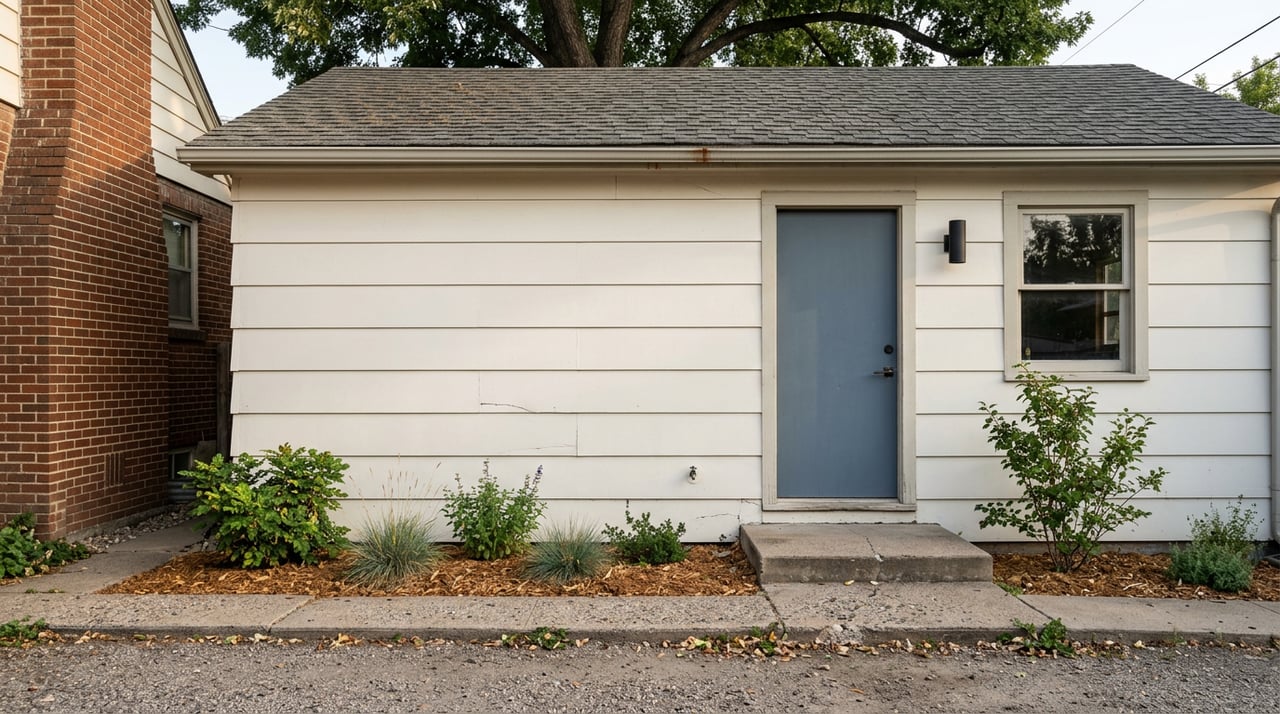
Walk a few blocks in any direction from 15th and 15th or the Highland Drive corridor and you will find bungalows quietly carrying a second kitchen, a separate entrance, or a detached structure in the backyard that used to be a garage. One recent Sugar House listing near the park markets its quiet, tree-lined street and walking distance to neighborhood favorites. Another lists full basement apartment capability as a selling point in its own right. What neither listing mentions, because most sellers do not realize it applies to them, is that the unit itself is the smaller part of what changes hands. The larger part is a document recorded against the property at the county, one that tells the next owner exactly who is allowed to live there.
That distinction matters more this year than it has in the past few, for reasons that have nothing to do with construction quality and everything to do with timing.
The covenant that comes with the deed
Salt Lake City does not simply issue a building permit and move on when a homeowner adds an accessory dwelling unit. Under city code, an approved ADU requires a restrictive covenant recorded with the Salt Lake County Recorder's Office before the unit can be occupied. That covenant states, among other things, that the owner will live on the property, that the ADU and the main home cannot be used as a short term rental, and that the city retains the right to confirm ongoing compliance. It is filed against the parcel, not against the person who built the unit, which means it survives every sale that follows.
For a seller, this is easy to overlook because the covenant was signed years ago, often by a previous owner, and rarely comes up again until closing. For a buyer, it is the single most consequential piece of paper in the file. Someone who assumes they can buy a Sugar House property, live elsewhere, and rent both units as a straightforward investment is planning around a structure the covenant does not permit. The owner, or a qualifying relative, has to occupy one of the two units. That requirement does not expire when the title changes hands.
Why the timing makes this more than paperwork
This detail would matter in any year, but 2026 adds a second layer that is actively confusing buyers right now. The Utah legislature passed SB284 this session, requiring cities with populations over roughly 5,000 to permit detached accessory dwelling units on qualifying lots by October 1, 2026, a deadline that is six weeks away as of this writing. Coverage of the bill has been extensive, and the plain reading many buyers take from it is that Utah just made ADUs easier statewide.
That reading is not wrong, but it is incomplete in a way that matters specifically for Sugar House. Salt Lake City already permits detached ADUs as a matter of right in residential zones and already eliminated the conditional use review that used to slow projects down. The October deadline is aimed at cities that historically restricted or banned detached units outright. Sugar House is not one of the neighborhoods where SB284 forces anything to loosen, because Salt Lake City got there first.
What SB284 does not touch is the owner-occupancy requirement. State law leaves setbacks, height limits, parking, and owner-occupancy rules to individual cities, and Salt Lake City has kept its owner-occupancy standard in place through every recent update. A buyer who has read the SB284 headlines and assumes the whole state is moving toward unrestricted rental flexibility is working from the wrong map for this specific parcel.
| Statewide, effective October 1, 2026 | Already true in Sugar House | |
|---|---|---|
| Detached ADUs on qualifying lots | Now required to be a permitted use in cities that previously restricted them | Already permitted as a matter of right |
| Conditional use review | Cities can no longer require it for qualifying detached ADUs | Already eliminated by council vote |
| Owner-occupancy | Left to local decision | Still required, recorded as a covenant |
| Short-term rental of the ADU | Left to local decision | Still prohibited |
What an appraiser actually sees
The covenant question shapes something buyers feel much more directly: what a lender will finance and what an appraiser will count.
A Salt Lake appraisal firm covering the metro area describes the split plainly. A legal ADU, meaning one with city approval, inspection sign-off, and zoning compliance, gets appraised as a genuine second unit. That opens the door to comparing the property against other homes with similar units and can support a valuation that reflects rental income. An ADU without that paperwork gets treated far more conservatively, sometimes contributing little or nothing to value even when the finish work is excellent.
Fannie Mae's own selling guide draws a related line at the highest and best use analysis appraisers are required to perform. Whether a property counts as a one-unit home with an ADU or something closer to a two to four unit property depends on details like separate utility metering, a distinct postal address, and whether the unit can legally be rented under current zoning. An ADU that predates the zoning ordinance that would otherwise prohibit it can still be treated as legal nonconforming, but that status has to be documented, not assumed.
None of this is abstract for a Sugar House seller. A basement apartment with its own entrance and a full kitchen looks identical to a buyer's eye whether or not the original permit was ever pulled. The appraisal is where the difference becomes financial, and it becomes financial at the exact moment a buyer's loan depends on it.
The market context that changes the stakes
A year or two ago, a Sugar House listing with an income-generating unit might have moved fast enough that these questions rarely surfaced before closing. The market has since cooled just enough to change that calculus. The average Sugar House home price stood at $703,000 as of July 2026, down 2.3 percent from a year earlier, even as the neighborhood continues to be rated one of the more competitive submarkets in the city. Prices easing while competition holds steady is exactly the kind of market where a buyer has room to ask questions they might have skipped two years ago, and where a lender has room to be thorough about anything that could complicate the appraisal.
A buyer excited about rental income from a Sugar House ADU is far more likely, in this kind of market, to ask for the covenant and the closed permit before writing an offer instead of after.
Three things worth confirming before you list
- Whether the original ADU permit was closed out with a final inspection, not just opened.
- Whether the restrictive covenant is recorded against the parcel at the Salt Lake County Recorder's Office, and whether it matches what was actually built.
- Whether the unit has ever been advertised or used as a short-term rental, which would put it in direct conflict with the covenant regardless of how the listing describes it.
Any of these can be resolved before a buyer's lender finds them independently. None of them can be resolved after an appraisal has already come back low.
A short FAQ
Does SB284 change anything for a Sugar House seller specifically? Not in the way the headlines suggest. Salt Lake City already permits detached ADUs and has already removed conditional use review. The October 1 deadline is aimed at cities that had not done that yet.
Can a new buyer simply remove the owner-occupancy covenant after closing? No. The covenant is recorded against the property and enforceable by the city or by an adversely affected party under state law. It does not expire with a sale.
What if the basement apartment was finished decades ago, before permits were common? Age does not substitute for documentation. An appraiser and a lender will still look for evidence that the space complies with current zoning or qualifies as legal nonconforming, and that evidence needs to exist on paper, not just in the age of the finishes.
A Sugar House property with a well-documented ADU is a genuinely stronger listing than one without paperwork to back it up. The gap between those two outcomes is rarely about the quality of the build. It is about whether the seller took the time, before the sign went in the yard, to confirm what is actually recorded against the home. If you are weighing a sale and want a clear read on where your property stands, Align Complete Real Estate Services can walk through the permit history and covenant status with you before a buyer's lender does it for you. Contact Us.