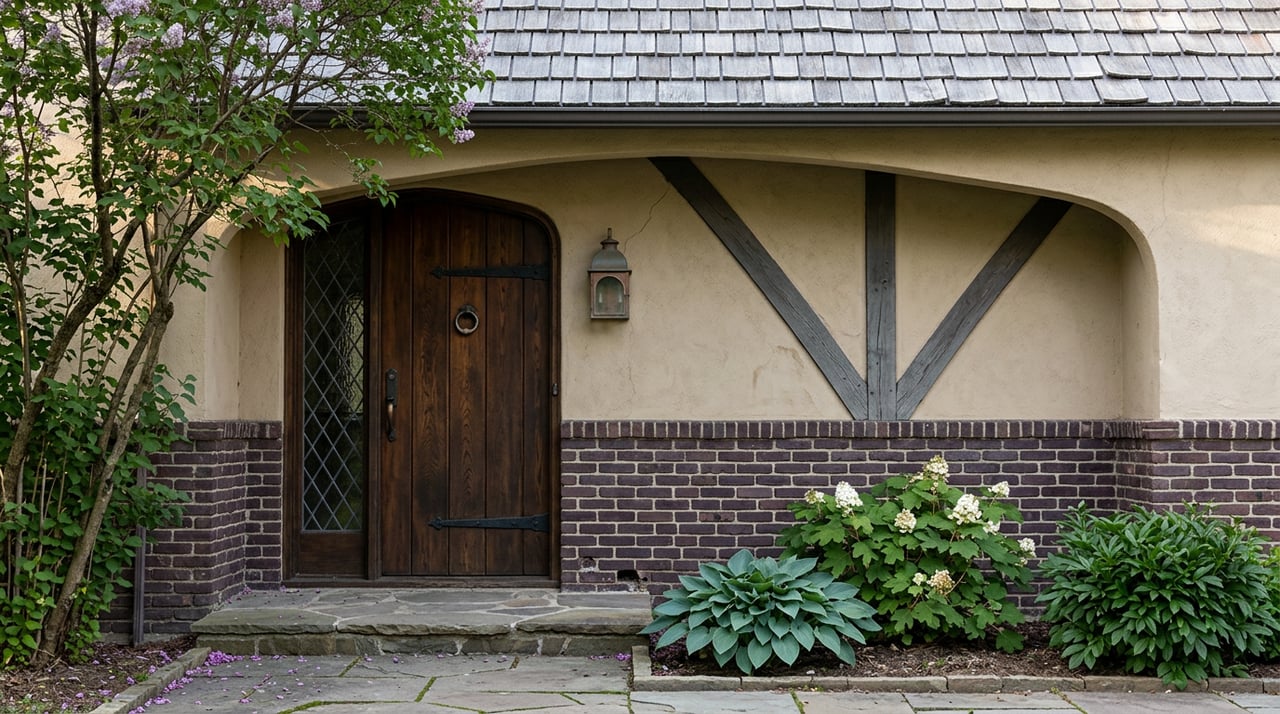
When a property owner on Harvard Avenue wanted to add a rear addition and a detached garage to a home inside the Harvard Heights Local Historic District, the request went through Salt Lake City's Historic Landmark Commission as a formal Certificate of Appropriateness. Staff reviewed the site plan. The commission held a hearing. The garage height needed a separate variance because it exceeded the district's standard. That is what it takes to change a contributing home on this particular stretch of Harvard.
Walk two blocks in almost any direction and that process does not exist. Same era of house, same brick, same National Register listing on paper, and no design review, no demolition hearing, nothing that would stop an owner from tearing the place down and starting over. Both addresses are in Yalecrest. Only one of them is protected.
The Difference A Listing Sheet Won't Show You
Most people assume that a National Register historic district comes with real teeth: someone reviews changes, demolitions get scrutinized, the streetscape is locked in. In Salt Lake City that assumption is only true for the smaller category layered inside it, the Local Historic District, or LHD. A National Register listing is largely honorary. It opens the door to certain tax credits for restoration work, and it puts a neighborhood on the map as historically significant, but it does not require a certificate of appropriateness and it does not stop a bulldozer. Preservation Utah has been direct about this gap: in a National Register-only area, an owner can demolish a contributing building without any preservation review at all.
Yalecrest earned its National Register listing in 2007, covering roughly 1,487 primary buildings across the neighborhood. But the National Register designation and the Local Historic District designation are not the same thing, and Yalecrest has never been placed under LHD protection as a whole. Only a handful of small pockets inside it have.
How Yalecrest Ended Up Split Into Pieces
The split traces back to a fight that played out between 2010 and 2012. As demolitions in Yalecrest accelerated and out-of-scale replacement houses started going up in place of period cottages, residents pushed the city to designate the entire neighborhood a Local Historic District. Property owners who did not want that level of oversight pushed back just as hard, and the dispute reached the Utah Legislature. In 2011, then-state Senator Wayne Niederhauser of Sandy, a developer himself, sponsored a bill that put a one-year moratorium on creating any new historic district in Yalecrest and, for that period, allowed demolition of up to 75 percent of any structure in the neighborhood.
The compromise that followed, finalized in new city regulations in late 2012, did not designate Yalecrest as a single district. Instead, it let residents in each of the neighborhood's original 22 subdivisions petition individually for Local Historic District status, then vote on it block by block. Some subdivisions did. Most did not.
That is the mechanism still shaping the neighborhood today. Yalecrest is not one zoning regime wearing a historic label. It is a patchwork where a small number of subdivisions carry real protection and the rest carry something considerably lighter.
What Actually Has Protection Right Now
The Local Historic Districts that exist inside Yalecrest today include Normandie Circle, Harvard Heights, Upper Harvard Yale Park, Princeton Park, Douglas Park, and Upper Yale 2nd Addition, each covering a small cluster of properties, anywhere from about ten homes to around thirty, concentrated on one or two streets. As recently as the fall of 2025, the preservation group KEEP Yalecrest led a walking tour introducing Upper Yale Heights as the newest addition to that list, confirming the patchwork is still expanding rather than settled.
Properties inside these districts fall under Salt Lake City's H Historic Preservation Overlay. That means exterior alterations require a certificate of appropriateness, and demolishing a contributing structure requires a public hearing before the Historic Landmark Commission. It is a real, enforceable layer of review.
Everywhere else in Yalecrest, the operative rule is the Yalecrest Compatible Infill Overlay, known as YCI, which the city adopted to cover the broader neighborhood. YCI applies to any R-1/5,000 or R-1/7,000 residential property inside the boundary formed by 1300 East, 800 South, Sunnyside Avenue, 1900 East, and 1300 South. Its purpose is to keep new construction and additions in scale with the surrounding block. It says nothing about demolition. A property governed only by YCI can be torn down without the design review, the public hearing, or the waiting period that a Local Historic District requires.
The preservation group KEEP Yalecrest reports that three contributing homes have already been lost to demolition so far this year, a pace its volunteers have been tracking street by street since the group's founding in 2008. Every one of those losses happened in the part of the neighborhood that only YCI covers.
What The Median Isn't Telling You
Salt Lake City's own housing data adds a second layer worth sitting with. As of March 2026, the median sale price in Yalecrest sat right around $1.0 million, essentially flat compared to a year earlier. But price per square foot rose 10.5 percent over the same period, and the typical home took 87 days to sell, up sharply from 19 days the year before. Only 15 homes changed hands that month, so the swing deserves a grain of caution rather than a headline.
Still, the shape of it is worth noticing. A flat median sitting on top of a rising price per square foot and a much slower sale pace does not describe one stable market. It describes a neighborhood where buyers are pricing homes differently depending on what they actually are, not just where they sit. None of this proves the zoning patchwork is the cause. But it lines up with a market where a property's regulatory status has become something a buyer has to work out address by address, rather than something the neighborhood-level median can answer for them.
What This Means Before You Write An Offer
If you are comparing a Yalecrest property to homes in other East Bench neighborhoods, the zoning status of that specific parcel changes what you are actually buying.
A home inside one of the Local Historic Districts comes with predictability. You know a contributing structure next door cannot be demolished on a whim, and you know any future addition you want to make will go through a defined review process, with defined standards, even if that process takes longer than a standard building permit.
A home under YCI only comes with more flexibility for your own renovation plans, since the design review is lighter, but less certainty about what happens on the lot next to you. The house you are buying because of its character could be sitting beside a future teardown, and nothing in the current YCI rules would stop it.
Salt Lake City's Historic Preservation office maintains current maps showing exactly which Yalecrest blocks fall inside a Local Historic District and which do not, and that boundary is worth checking against the specific address, not the neighborhood name, before you get attached to a house. The municipal code section governing the YCI overlay is public record and spells out exactly what it does and does not review.
A Short FAQ
Does being in the Yalecrest National Historic District protect a home from demolition? Not on its own. National Register status is largely honorary and opens the door to certain restoration tax credits, but it does not require design review or a demolition hearing. Only the smaller Local Historic Districts inside Yalecrest carry that requirement.
How do I find out if a specific address is inside a Local Historic District? Salt Lake City's Historic Preservation office keeps current district maps and can confirm the status of an individual parcel. This is worth checking before making an offer, since the boundary lines run block by block and sometimes lot by lot.
Can a new Local Historic District form after I already own a home in Yalecrest? Yes. The petition and vote process that created districts like Harvard Heights and Princeton Park is still active, and Upper Yale Heights joined the list as recently as 2025. A subdivision that is unprotected today could organize for LHD status later, which would add design and demolition review to properties that did not previously have it.
Understanding which set of rules applies to a specific Yalecrest address is not a formality. It shapes what you can build, what your neighbors can build, and how a future buyer will read the risk on your own home when it is your turn to sell. If you are weighing a Yalecrest property against other East Bench options, or trying to understand what a specific parcel's zoning status actually means for your plans, Align Complete Real Estate Services can walk through the district maps and the ordinance with you before you write an offer.