If you are looking for industrial or flex space in Millcreek, the first thing to know is simple: this is not a big-box warehouse market. Millcreek is a tighter, infill-oriented environment where smaller, adaptable buildings often make more sense for local operators and investors. If you understand how the city’s zoning, location, and product mix work together, you can make a smarter decision about what to buy, how to use it, and what it may be worth over time. Let’s dive in.
Why Millcreek Works Differently
Millcreek is better viewed as a constrained employment market than a traditional industrial district. According to the city’s planning and zoning framework, most private land falls into residential, commercial, mixed-development, and a legacy Light Manufacturing zone.
That matters because the Light Manufacturing, or M, zone is limited to parcels that already had that zoning. In other words, Millcreek does not function like a city with large areas ready for new warehouse expansion. The supply is naturally tighter, which makes existing industrial and flex properties more selective and often more strategic.
What Space Fits Millcreek Best
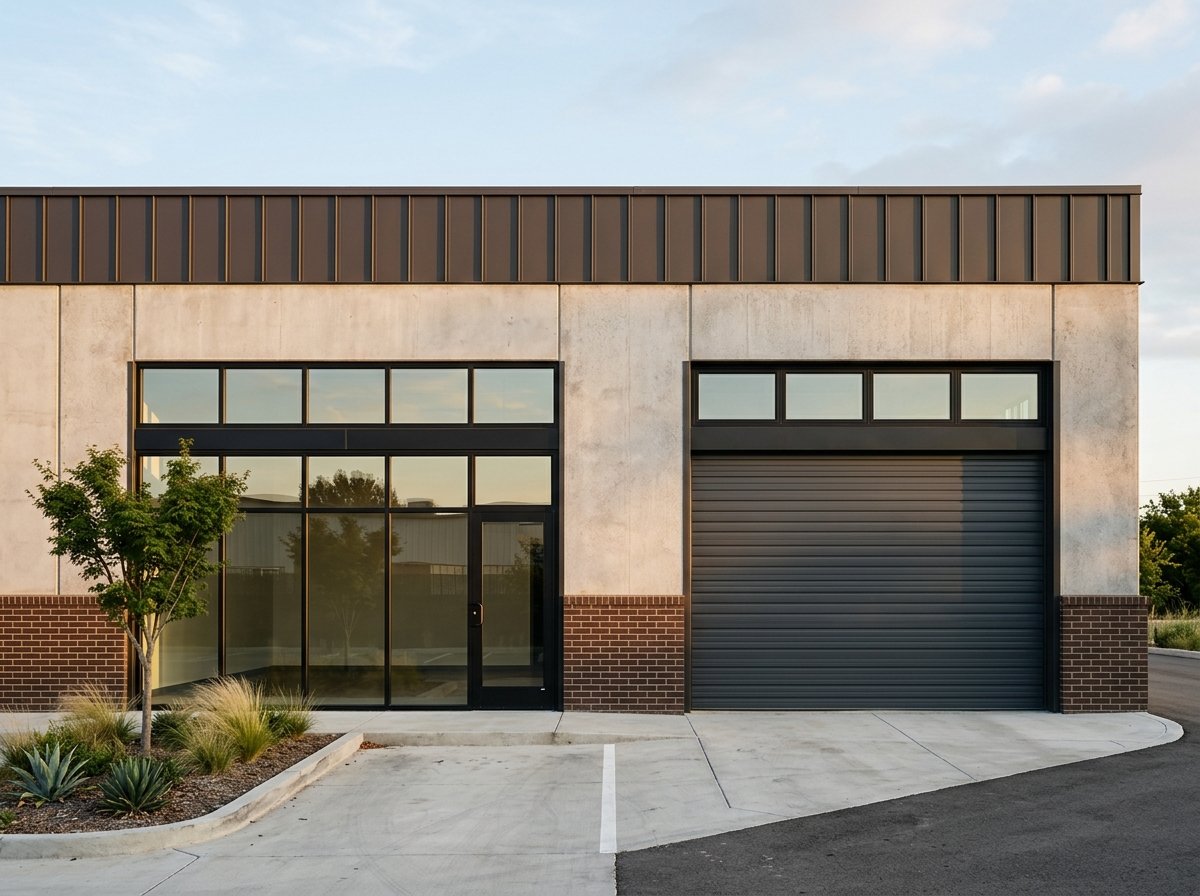
For most businesses, the best fit in Millcreek is small-bay, multi-use, or service-oriented space. The city’s general plan treats light manufacturing as an employment category that can include small-scale manufacturing, light industrial, processing, wholesaling, and flex space.
The practical takeaway is that Millcreek tends to suit businesses that need adaptable square footage more than massive logistics footprints. That can include a contractor shop with office space, a service business with storage, a boutique distributor with a showroom component, or a light assembly operation.
Flex Space Has Specific Rules
In the M zone, flex space is permitted, but it comes with important limits. The code caps flex space at 10,000 square feet per building and requires at least 20 percent of the story area to be office or retail.
That requirement can be a real advantage if your business needs a customer-facing component, administrative space, or a hybrid office-shop layout. It can also be a constraint if you are underwriting a property as pure warehouse space, because the building still needs to support that office or retail mix.
Permitted Uses Are Broad, But Not Unlimited
Millcreek’s M-zone code allows a range of uses, including office, general retail, warehouse, light manufacturing, flex space, eating and drinking establishments, auto service and repair, self-storage, and truck transfer facilities, subject to use-specific standards.
Still, the city is clear that uses not explicitly listed are prohibited unless they are confirmed through a classification request. That means a building that looks workable on paper may still need city review before your intended use fits cleanly within the code.
Why Location Matters in Millcreek
Millcreek’s value is not just about square footage. It is also about access.
The city’s planning framework identifies freeway and major road access, TRAX routes, a FrontRunner route, and nearby TRAX stations as part of the broader land use picture. UTA reports that TRAX runs seven days a week with 15-minute peak frequency, and the Blue Line serves the south-to-north Salt Lake Valley corridor.
For many industrial-flex users, that kind of access matters as much as loading or storage. If your business depends on employees getting to work easily, customers finding you without hassle, or central access across the valley, Millcreek can offer a strong operating position.
Transit-Adjacent Space Can Be Especially Useful
Millcreek’s mixed-development zoning is designed for a blend of limited commercial, office, residential, and indoor light industrial uses, especially near transit-oriented areas. In the Meadowbrook area, the city specifically encourages mixed-use patterns near stations, including enclosed light industrial uses.
That creates a different type of opportunity than you would find in a traditional industrial park. In Millcreek, industrial-flex space may sit closer to office, retail, and service uses, which can help businesses that benefit from visibility, convenience, and a more integrated setting.
Start With Zoning, Not Price
When you evaluate industrial or flex space in Millcreek, the first question should not be what the building costs. The first question should be whether your intended use actually works on that site.
Millcreek directs property owners and buyers to the zoning map and Title 19 to determine what is allowed. The city also offers application paths for zoning map amendments, conditional use permits, site plan review, change of use, nonconforming determinations, variances, and other land use requests.
That process matters because in a constrained market, even a functional building can carry entitlement risk. If the existing use does not match your planned operation, you may need additional approvals before the property truly meets your needs.
Legacy M Zone Means Limited Supply
One of the most important details in Millcreek is that the Light Manufacturing zone is a legacy district. No new land may be added to it.
That scarcity can support long-term value for well-located, code-compliant buildings. At the same time, it means you should not assume there will be many easy alternatives if a property falls out of contract or fails due diligence.
Adjacency Rules Can Change the Equation
Millcreek’s code adds extra restrictions when a site abuts residential uses, a residential zone boundary, or a street. In those situations, operations generally must be conducted predominantly inside an enclosed building, and outdoor storage or service functions face additional screening and location rules.
This is a major underwriting point for businesses that need outdoor work areas, visible storage, or active yard use. A site that seems workable from the street may become much less flexible once you apply the code standards.
Site Standards Still Matter
The M-zone code includes traditional dimensional standards too. The zone requires a 20,000-square-foot minimum lot area, 100-foot minimum lot width, a 45-foot maximum building height, and larger setbacks when a parcel abuts residential uses.
Those basics can affect everything from expansion plans to circulation and parking. If you are buying for future growth, you want to understand how much of the site is truly usable under current standards.
How to Underwrite a Millcreek Flex Property
A good acquisition in Millcreek is usually not just about buying a building. It is about matching the building, the site, and the zoning to a real business plan.
For owner-users, operational fit should drive the analysis. For investors, reusability and leasing flexibility matter just as much.
Questions Owner-Users Should Ask
Before you move forward, look closely at how the property functions day to day.
Ask questions like:
- Does the building have the right loading and access pattern?
- Is there enough parking for staff, customers, or service vehicles?
- Does the ceiling height support the intended operation?
- Is there enough utility capacity for your business?
- Can the work be kept enclosed where the code requires it?
- Does the layout support office, customer-facing, and shop uses together?
These questions are especially important in Millcreek because the code places real weight on enclosed operations, site compatibility, and use-specific compliance.
Questions Investors Should Ask
If you are buying as an investor, focus on how easily the building could serve the next tenant, not just the current one. In a market like Millcreek, overly specialized space can narrow your pool of future users.
The strongest candidates are often buildings that can support several permitted uses with limited rework. That flexibility can help with leasing, resale, and long-term value preservation.
What the Broader Market Suggests
Salt Lake area industrial data helps support the case for smaller, adaptable product. Cushman & Wakefield reported Q2 2025 industrial vacancy at 6.2 percent overall, with average asking rent at $0.80 per square foot per month NNN.
More importantly for Millcreek-style properties, vacancy was much tighter in manufacturing space at 0.7 percent and office service or flex at 1.5 percent. Newmark’s Q1 2026 report also said direct vacancy fell to 5.7 percent overall, while non-bulk product types were considerably tighter at 2.5 percent combined.
You do not need to force a big conclusion from those numbers. The simple read is that smaller, functional industrial and flex product remains competitive in the broader Salt Lake market, especially compared with bulk distribution categories.
The Real Opportunity in Millcreek
The best way to think about Millcreek is scarcity plus flexibility. Industrial land is limited, the M zone is legacy zoning, and the city’s planning framework favors small-scale employment uses and mixed-use patterns rather than large warehouse campuses.
That can make Millcreek appealing for local businesses that want a strategic operating base close to employees, customers, and central valley access. It can also make the right building attractive to investors who value adaptable space in a constrained submarket.
The key is disciplined due diligence. In Millcreek, the right deal usually comes from getting the zoning, use, layout, and long-term exit story aligned from the beginning.
If you are evaluating industrial or flex space in Millcreek, a thoughtful local strategy can save you time, reduce risk, and help you see value that is easy to miss at first glance. To talk through owner-user goals, investment criteria, or entitlement considerations, connect with Align Complete Real Estate Services.
FAQs
What kind of industrial space is most common in Millcreek?
- Millcreek is generally better suited to smaller-bay, multi-use, and service-oriented industrial or flex properties rather than large logistics warehouses.
Does Millcreek allow new Light Manufacturing zoning?
- No. The city’s Light Manufacturing zone is a legacy district that applies only to parcels that already had that zoning, and no new land may be added.
What are the size rules for flex space in Millcreek?
- In the M zone, flex space is capped at 10,000 square feet per building, and at least 20 percent of the story area must be office or retail.
Why is zoning due diligence important for Millcreek industrial property?
- Millcreek’s code states that uses not explicitly listed are prohibited unless confirmed through a classification process, so buyers should verify use compliance before underwriting a deal.
Can outdoor storage be used freely on Millcreek industrial sites?
- No. Outdoor storage is not a principal use, and when it is allowed as an accessory condition, it must meet screening, paving, and location requirements.
Is Millcreek a good fit for owner-user businesses?
- It can be, especially for businesses that need adaptable space, central valley access, customer convenience, and a layout that supports enclosed operations and mixed office-shop use.
What makes Millcreek flex space appealing to investors?
- The combination of limited industrial supply, legacy zoning, and stronger demand for smaller non-bulk industrial product can make adaptable, code-compliant buildings more attractive for leasing and resale.